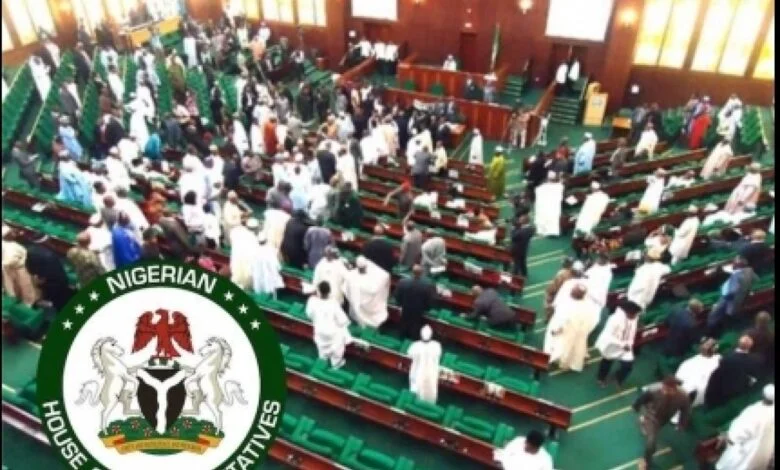
Checks and balances are derived from the principle of separation of powers to ensure proper check on the exercise of the powers of each of the three arms of government, namely: the executive, the legislature and the judiciary.
According to the 1999 Constitution of the Federal Republic of Nigeria (as amended), the principle of checks and balances is also aimed at preventing an arm of government from becoming too dominant.
The legislature, which has been identified as an insignia of democracy, is conceived as truly the people’s assembly, with the constitutional mandate of checkmating the excesses of other arms of government.
It is, therefore, expected of the parliament to uphold the tenets of decency and rules of engagement in the discharge of its checks and balances duties.
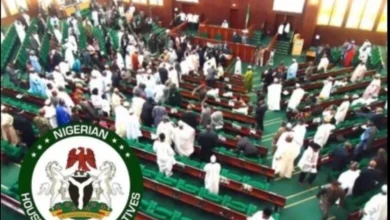
The question, at this juncture, is: How effective has the 10th House of Representatives been in joining forces with the Senate in ensuring checks and balances, particularly on the executive arm of government since its inauguration in 2023?
Opinions, however, differ on the assessment of the house of representatives on how far it has been able to deliver in this regard.
While some analysts hail the lawmakers, saying that they have effectively held the executive arm accountable, others score them very low, short of describing them as a mere appendage of the executive.
The Co-Chairman, Campaign for Good Governance Initiative (CGGI), Chief Udeme Akpan, expressed disappointment over the role of the 10th House of Representatives vis-à-vis its checks and balances` role.
Akpan, while assessing the lawmakers in the lower legislative chamber, opined that they have displayed indices of lack of autonomy in the performance of their constitutionally-assigned duties.
“There are many instances of the failure of the 10th house of representatives to adequately checkmate the executive arm,” he said.
Akpan condemned what he called the lawmakers’ express approval of some important national issues from the presidency, describing it as a sign of a rubber stamp legislature.
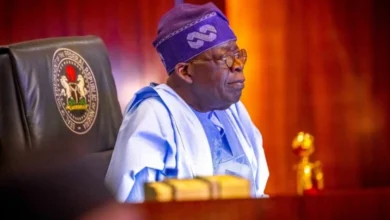
Akpan particularly cited the approval of the state of emergency declared by President Bola Tinubu in Rivers in March, maintaining that it ought not to be done with mere voice vote by members of the house of representatives.
To the Coordinator of Centre for Democratic Defence (CFDD), Dr Saviour Eze, the current house of representatives members have not lived up to the expectations of Nigerians.
Drawing a comparison between the 5th National Assembly and the current one, he saluted the former for thwarting the third term agenda of former President Olusegun Obasanjo.
“The continued passage of all that come from the executive by the 10th House of Representatives is a recipe for autocracy and threat to democracy,” he said.
Eze urged the lawmakers to practically exhibit the popular maxim: “power belongs to the people”, with a distinct and clear application of its constitutional duties, particularly in the area of checks and balances.
He reiterated the imperatives of checks and balances, saying that the parliament should avoid being an appendage of the executive as much as possible.
In his own opinion, Mr Faruk Ciroma of Voter Education School (VES), said that separation of powers as well as checks and balances remain therapies to potential dictatorship.
Ciroma argued that too much camaraderie between the executive and the legislature could violate the principle of checks and balances, thereby eroding public trust.
He expressed dismay over the conduct of the 10th Assembly, stating that it has undermined accountability and probity.
Also speaking, a Public Affairs Analyst, Mr, Dele Ewuola, berated the current 10th Assembly for giving approval to virtually to every wish of the executive.
Ewuola was particular about the approval of persistent borrowings by the Federal Government despite the trillions of naira being generated by government agencies such as NNPCL and Federal Inland Revenue Service (FIRS), among others.
He urged the lawmakers to always ask questions on management of internally-generated revenues before giving approval to any external loan by the executive.
Some schools of thought, however, commend members of the house of representatives for maintaining a harmonious relationship with the executive.
The Co-Chairman of the People’s Watchdog, Mr Johnson Ikuru, said that they have performed well, especially in the area of oversight.
Ikuru, who scored the lawmakers high in its oversight of the interim administration in Rivers during the period of the state of emergency, said the oversight was fruitful.
He commended them for effectively taking over the role of Rivers House of Assembly while the emergency rule lasted in the state.
Ikuru noted that the house of representatives particularly prevented an abuse of power and financial malfeasance through their oversight during the emergency.
Rev. Franklin Anthony, Chairman, Civic Advocacy for Democracy and Justice (CADJ), also lauded the federal parliament for exposing the technical glitch in the conduct of the 2025 Unified Tertiary Matriculations Examination (UTME).
Anthony applauded the lawmakers for carrying out a thorough investigation, which forced the Joint Admissions and Matriculation Board (JAMB) to accept responsibility for the glitch.
Also speaking, the National President, Initiative for Leadership Development and Change (ILDC), Chief Ugochukwu Nnam, said that the lawmakers deserve commendation for investigating the delay in the payment of stipends to Nigerian students abroad.
“The Nigerian house of representatives, through its oversight duties, also uncovered alleged corruption in scholarship administration through an investigation launched in response to complaints from students and parents.
“Regarding the non-payment and mismanagement of stipends, the probe focused on the operations of Federal Scholarship Board (FSB) and Nigerian Education Loan Fund (NELFund),” he said.
Nnam further stated that the current legislature has dignified Nigeria’s democracy through its uncompromising and effective performance of its checks and balances role.
Nnam, who defined oversight as the process by which a legislature monitors, scrutinizes the performances of the executive, said that the 10th house of representatives has shown capacity in that regard.
Even though opinions are diverse on the effectiveness of the 10th house of representatives as far as checks and balances and concerned, analysts are quick to advise the lawmakers to up their ante, in conjunction with their counterparts in the upper legislative chamber, in the interest of good governance, overall development and democratic sustainance in Nigeria.