By Fabian Ekeruche
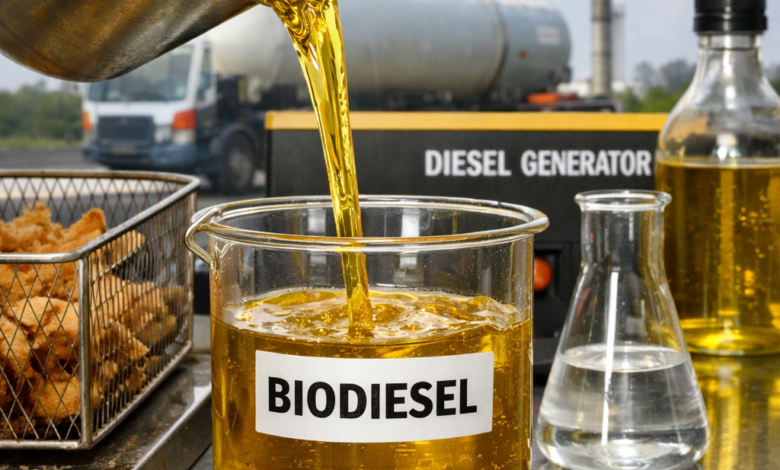
A Don, Dr Esther Babatunde, says waste cooking oil generated by restaurants and
households across Nigeria can be converted into high-quality biodiesel capable of
powering generators, trucks and industrial equipment.
Babatunde, a Senior Lecturer in the Department of Chemical Engineering,
University of Ilorin, disclosed this on Tuesday in Lagos.
While speaking on her research findings on renewable energy and waste
valorisation, she said that biodiesel obtained from waste cooking oil could reduce
energy costs, pollution and fuel imports.
Waste valorisation is defined as the process of reusing, recycling, composting, or
converting waste into useful products, such as chemicals and fuels, by
transforming discarded materials into raw materials or energy sources.
Babatunde, who is also a Postdoctoral Research Fellow at the University of
Johannesburg, South Africa, noted that Nigeria’s hospitality sector produced large
volumes of waste cooking oil annually.
She also noted that much of these waste cooking oils are improperly disposed of
despite its potential as a renewable fuel feedstock.
According to her: “What many people regard as useless waste is actually a
valuable resource. Used cooking oil can be converted into biodiesel that can power
generators, trucks and industrial equipment, while also reducing environmental
pollution.
“Nigeria produces over 100,000 tonnes of waste cooking oil every year from
hotels, bukas and fast-food outlets, especially in urban centres like Abuja, Lagos
and Port Harcourt.
“This is not sludge; it is a feedstock goldmine for renewable diesel.
“At a time when we export crude oil but still depend on imported fuels due to weak
refining capacity, biodiesel from waste oil offers a local, sustainable and affordable
alternative,” she said.
The postdoctoral researcher explained that biodiesel was produced from waste
cooking oil through a chemical process known as transesterification, which
involves combining the oil with methanol in the presence of a catalyst.
“In our laboratory at the University of Ilorin, we replicated industrial-scale
experiments using waste oil collected from campus cafeterias. Under optimal
conditions of 60 degrees Celsius, a 12:1 methanol-to-oil ratio and just three per
cent catalyst loading, we achieved a biodiesel yield of 97.6 per cent that met
ASTM standards.
“This is not rocket science. It is chemical engineering adapted to Nigerian realities,
using locally sourced materials, including catalysts derived from waste and natural
resources.
“Unlike biodiesel produced from edible oils such as palm or soybean, waste
cooking oil avoids the food-versus-fuel debate and significantly lowers production
costs,” she said.
On environmental benefits, Babatunde said biodiesel burns cleaner than petroleum
and diesel, and could significantly improve air quality in Nigerian cities.
She urged government to integrate waste cooking oil utilisation into the National
Energy Master Plan and called on universities to lead training and extension
programmes.
“These challenges are not barriers; they are opportunities. With research support,
policy backing and community engagement, biodiesel from waste oil can become a
key player in Nigeria’s alternative energy mix,” Babatunde said.
She concluded that although biodiesel was not a cure-all, it represented a realistic
step toward a cleaner and more resilient energy future for Nigeria.
“Climate change, declining global oil demand and rising energy costs demand
pragmatic solutions. With a blend of chemistry and community effort, we can turn
today’s waste into tomorrow’s fuel,” she said.