By Kadiri Abdulrahman
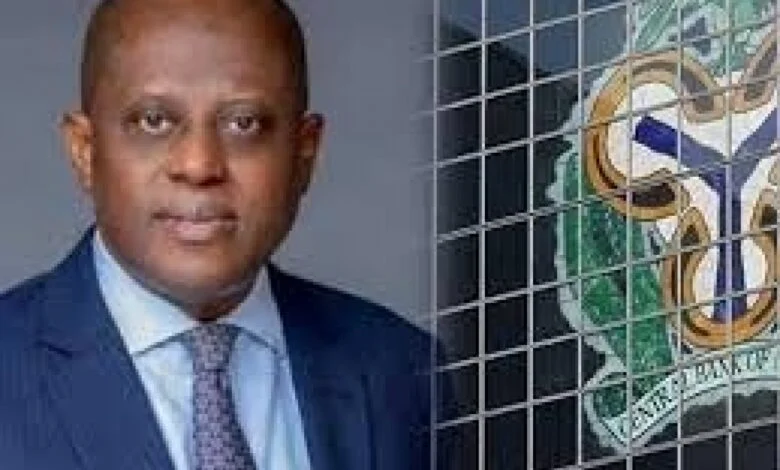
The Governor of the Central Bank of Nigeria (CBN), Mr Olayemi Cardoso, says the Federal Government’s economic reforms and bold fiscal consolidation measures are crucial to repositioning the Nigerian economy on a more sustainable growth trajectory.
Cardoso said this on Tuesday in Abuja, while delivering a keynote address at the 2025 Annual Executive Seminar of the apex bank with the theme,” Deepening Reforms: Path to Diversification and Sustainable Growth”.
According to Cardoso, while most of the reforms came with short-term challenges, they were essential to repositioning the economy on a more sustainable growth trajectory, adding that the theme of the seminar was both timely and strategic.
Cardoso posited that Nigeria’s financial markets in a shifting global landscape highlighted the need to strengthen investor confidence through credible policies, transparent markets and sound governance.
“As a result of the credible policies, the transparent markets and sound governance, we have seen a return of investor confidence in our markets. Price stability at the core, advancing Nigeria’s policy framework through inflation targeting.
“The second one emphasises the importance of a credible inflation targeting regime to enhance predictability, guide market expectations and anchor long-term investments for sustainable growth,” he said.
The Minister of State for Finance, Dr Doris Uzoka-Anite, in her contribution said that the ministry deeply valued the robust relationship with the CBN.
Uzoka-Anite said that the finance ministry, together with the CBN formed the fiscal and monetary pillars of Nigeria’s economic stability.
According to her, both are essential for steering the economy towards increasing growth, productivity, and long-term competitiveness, adding that Nigeria’s goal was to generate gross domestic product of over four per cent per annum by 2027.
“Mathematically, that means that by 2037, we will only have doubled our GDP. So, if we actually multiply seven per cent by the current 375 billion dollars, we will just be doubling our GDP growth rate,” she said.
The minister posited that the sector-specific mix would shift over time, adding that the key takeaway is that national and household income will double, reducing poverty by a substantial percentage.
“If we achieve more than seven per cent, then the period within which the income objective we are expecting will be accelerated,” she said.
Uzoka-Anite said that President Bola Tinubu had also set an aggressive goal of building Nigeria’s GDP to one trillion dollars by 2037.
According to her, that will require a GDP growth rate closer to 10-12 per cent per annum consistently for the coming decade.
“That stretch goal is a great motivator for the economy and its enterprises and generators. As policymakers, our focus should be on how to set the conditions to deliver on Mr President’s goal,” she said.
CBN’s Deputy Governor, Economic Planning, Dr Mohammed Abdullahi, said that the annual seminar had served as a strategic platform for the apex bank’s leadership to critically examine the emerging domestic and global macroeconomic trends.
Abdullahi said that the idea was to deliberate on policy options that strengthen the CBN’s mandates for implementation.
“The theme for this year’s seminar, Deepening Reforms, Paths to Disinflation and Sustainable Growth, reflects the prevailing domestic realities.
“It also reflects the concerted efforts by monetary and fiscal authorities to restore macro stability, strengthen investor confidence, and place Nigeria on a sustainable growth trajectory.
“Over the past 18 months, the Nigerian economy has experienced one of the most extensive reform episodes in its recent history
“This encompasses robust fiscal consolidation measures, the unification and liberalisation of the foreign exchange markets, and enhanced monetary and fiscal policy coordination.
“Although, early indicators suggest positive macroeconomic adjustments, the reform trajectory remains incomplete, necessitating sustained policy collaboration and structural follow-through to consolidate on the emerging gains,” he said.
Abdullahi added that the country’s central policy challenge for 2026 and beyond was to consolidate and deepen the reforms to ensure a smooth transition from secularisation to sustained and inclusive growth.