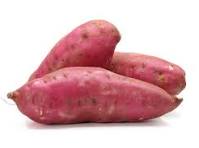
Many People Don’t Realize It, But Sweet Potatoes And Regular Potatoes Are Not Closely Related At All, And Science Explains Why

By Madison Reed
The woman at the farmers’ market looks honestly confused. In one hand, she’s
holding a bag of big russet potatoes. In the other, a cluster of copper-colored sweet
potatoes with awkward little curves. “So,” she asks the vendor, “which kind of
potato is healthier? They’re basically cousins, right?” The man behind the stall
smiles, shrugs and says what most of us would say: “Same family, pretty much.
Just one is sweeter.”
Check it out
The thing is, science doesn’t agree with that at all. Not even a little bit.
Sweet potatoes and regular potatoes live side by side in our kitchens, but not in the
same branch of the plant family tree. They just ended up with the same last name
by accident.
Sweet potato vs. potato: kitchen twins, botanical strangers
Put a sweet potato and a regular potato on the cutting board and your brain
instantly files them together. Same basic shape, similar skin, both turn into fries if
you get the oil hot enough. Our daily lives trick us into thinking they must be close
relatives. It feels logical, almost obvious.
Botanists see something totally different. For them, those two “potatoes” are like
people who happen to live in the same building but don’t share any DNA. One
belongs to the nightshade family, the other to a family that includes morning
glories. They’re neighbors in your pantry, not siblings in nature.
You can trace the confusion way back. European explorers met both tubers at
different times, in different parts of the Americas, and then dragged them across
the world with sloppy naming habits. Sweet potatoes were called all kinds of
things: “batatas,” “yams,” “pottato.” Regular potatoes, the ones from the Andes,
ended up stealing the spotlight in Europe and keeping the shorter, catchier name.
Somewhere along the way, the language fused. Grocers labeled, cooks improvised,
and families just repeated what they heard. That’s how you end up with recipes that
say “potatoes or sweet potatoes” on the same line, as if they were just color
variations. Language stayed lazy while science quietly moved on.
From a scientific standpoint, the split is brutal. Regular potatoes sit in the
Solanaceae family, next to tomatoes, peppers, eggplants and deadly nightshade.
Sweet potatoes belong to the Convolvulaceae family, sharing more with those
delicate purple-and-white morning glory flowers that climb fences. Different
families, different genera, different evolutionary paths.
The only reason they both became “potatoes” to us is that humans like simple
categories. Round, starchy, goes in the oven? Must be the same thing. Nature
didn’t sign off on that shortcut.
What science sees when it looks under the skin
If you want a simple way to remember the difference, start in the garden, not the
kitchen. Regular potatoes grow on underground stems called stolons, attached to a
low, leafy plant with white or purple flowers that looks weirdly like a tomato plant.
Sweet potatoes grow on sprawling vines, with heart-shaped leaves that could
almost pass for a decorative plant in someone’s living room.
Gardeners will tell you: they don’t behave the same, don’t grow the same, don’t
react to weather the same. That quiet, physical reality is a giant clue that they don’t
share a tight family bond.
The confusion gets worse in supermarkets that label sweet potatoes as “yams.”
True yams are yet another story: they come from a completely different plant
family again (Dioscoreaceae), mostly grown in Africa, Asia and the Caribbean.
Their flesh is usually whiter, more fibrous, sometimes almost slimy when cooked.
In North America, orange-fleshed sweet potatoes got marketed as “yams” decades
ago, just to distinguish them from paler sweet varieties on the shelf. That’s how
you end up with three different plants – potato, sweet potato, true yam – mashed
together in one foggy word cloud. The price of marketing shortcuts is permanent
confusion.
Botanists sort this all out with a cold kind of clarity. Regular potato: Solanum
tuberosum. Sweet potato: Ipomoea batatas. Their DNA tells stories of different
ancestors, different migrations, different adaptations. One evolved in the Andes
highlands, the other closer to tropical regions of Central and South America,
sailing across the Pacific on ancient ocean currents or with early human travelers.
They’re both starchy underground storage organs, yes, but they’re not built from
the same blueprint. Calling them the same thing because they both go well with
butter is like saying a dolphin and a shark are almost the same because they both
live in the sea.
Food choices, myths, and what your plate is really saying
Once you stop seeing them as cousins, your kitchen decisions change a little. You
start asking different questions: not “which potato is healthier?” but “what does
each one bring to the table?” That’s where the science actually becomes usable, not
just a quirky fact for trivia night.
Regular potatoes are rich in vitamin C, potassium and resistant starch, especially
when cooled after cooking. Sweet potatoes are loaded with beta carotene (that
orange color is your reminder), some vitamin E, and more fiber in many
preparations. Different bodies, different benefits.
We’ve all been there, that moment when you decide to “eat healthy” and
immediately swap every regular potato for sweet potato as if you’d just made a
life-transforming choice. The diet industry loves that move. It’s simple, binary,
easy to sell on a reel or a TikTok: white potato bad, orange potato good.
Let’s be honest: nobody really does this every single day. Most people cycle
between both depending on price, cravings, and what’s already in the cupboard.
The truth sits somewhere less dramatic. Both can fit into a balanced diet, especially
when they’re roasted or boiled instead of swimming in deep-fryer oil.
“From a nutritional science perspective, comparing sweet potatoes and regular
potatoes is like comparing apples and pears,” says one dietitian I spoke to.
“They’re different fruits from different trees, each with its own strengths. The real
question is how you cook them and how often you eat them.”
Regular potatoes: More potassium, often more total starch, great for energy and
satiety.
Sweet potatoes: More beta carotene, often lower glycemic impact when eaten with
skin and some fat.
Both: Can be part of a nutrient-rich meal when paired with protein, healthy fats,
and vegetables.
French fries of any kind: mostly a story about oil, not about which root you started
with.
*The real shift comes when you treat both as ingredients to play with, not villains
or heroes on your plate. *
Beyond the label: what these “false cousins” reveal about us
Once you learn that sweet potatoes and regular potatoes aren’t close relatives at all,
you start noticing how often we lump things together just because they look similar
on the surface. Two roots in a bin, two people in a group, two countries on a map.
Our brains are lazy pattern machines, cutting corners to get through the day.
Peeling that back a bit can be strangely liberating. If something as ordinary as your
side dish hides this much complexity, what else are you oversimplifying without
even noticing?
Next time you’re at the grocery store, watch how people hover in front of the
potato section, debating prices, recipes, vague health claims. There’s a quiet
anthropology in that aisle. A mother grabbing sweet potatoes because she heard
they’re “better for kids.” A student going for the giant bag of cheap russets because
rent is due. A health-conscious shopper juggling both, imagining balanced meals
that never quite look like the wellness blogs.
Behind each choice is a mix of science, myth, habit and hope. The labels don’t tell
that story. People do.
This whole “not-related-at-all potatoes” thing is a tiny reminder that reality rarely
fits the neat boxes we build for it. Sweet potatoes are morning glory cousins
reorganized into fries. Regular potatoes are nightshade tubers turned comfort food.
Science quietly maps the distance between them while our language blurs the lines.
Maybe the most useful takeaway isn’t which one you bake tonight, but the habit of
asking, every now and then: what am I assuming just because two things share a
name, a color, or a shelf?