By Yunus Yusuf
Some power sector experts have expressed concern over the recurring collapse of
the national electricity grid, urging the Federal Government to decentralise the
country’s power infrastructure to improve reliability and efficiency.
The experts said this on Wednesday in Lagos, following another nationwide
blackout triggered by a system collapse on Tuesday.
This latest incident marked the second grid failure within a week, coming just days
after a similar collapse.
It also coincided with the Federal Government’s signing of a N501.021 billion
bond under the N4 trillion Power Sector Multi-Instrument Issuance Programme,
designed to settle legacy debts owed to electricity generation companies (GenCos).
Data from the Nigerian Independent System Operator (NISO) showed that power
generation dropped to zero megawatts at about 11:00 a.m., plunging the entire
country into darkness.
Electricity distribution companies, including Benin, Eko and Ibadan electricity
distribution companies (DisCos), confirmed zero power allocation during the
outage, disrupting economic and social activities nationwide.
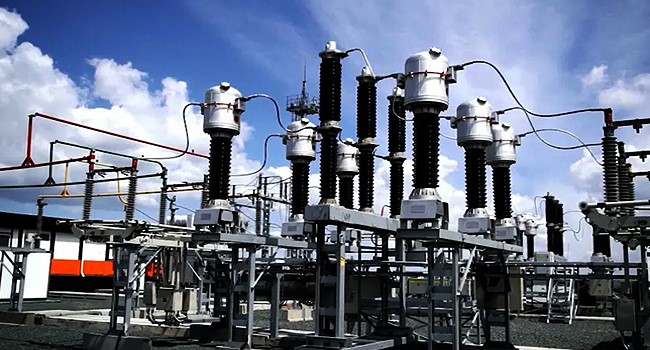
The repeated failures have renewed concerns over the fragility of the nation’s
electricity transmission infrastructure.
As of the time of filing this report, neither the Transmission Company of Nigeria
(TCN) nor NISO had issued an official explanation on the cause of the collapse or
a timeline for full restoration.
Although electricity supply has gradually returned to some areas, the impact of the
outage remains widespread.
Speaking on the development, an energy expert, Dr Olukayode Akinrolabu, said
the power sector requires urgent structural reforms, including grid decentralisation,
renewable energy integration and market restructuring.
According to him, decentralising the grid will empower states to regulate their
electricity markets, attract private investment and promote renewable energy
solutions, such as solar mini-grids, thereby reducing dependence on fossil fuels.
Akinrolabu noted that ongoing market reforms, including the establishment of
NISO, were intended to improve operational efficiency and restore investor
confidence, but stressed that more needed to be done.
“To stabilise the grid, the power sector should be segmented by states to allow for
manageable power volumes and more effective system control,” he said.
Akinrolabu, who also chairs the Customer Consultative Forum for Festac and
Satellite Towns, called for the immediate upgrade of Supervisory Control and Data
Acquisition (SCADA) systems for real-time monitoring, expansion of transmission
lines and rehabilitation of ageing infrastructure.
“The national grid has become technically complex due to its extensive
connectivity, making it extremely difficult to manage,” he said.
He added that the Bola Tinubu administration could improve grid performance by
investing in modern transmission infrastructure.
He advocated the adopting of a state-centric coordination model among power
operators and strengthening regulatory enforcement at the sub-national level to
attract investment.
Corroborating his views, Mr Cdon Adinuba, Communications Consultant,
Geometric Power Company, said Nigeria’s transmission network required massive
investment, describing it as obsolete and poorly maintained.
Adinuba observed that the grid frequently collapses whenever power generation
exceeds 5,000 megawatts, leaving much of the country’s estimated 13,000
megawatts installed generation capacity grossly underutilised.
He welcomed the Federal Government’s renewed interest in developing a second
national grid, an idea originally proposed by a former Minister of Power, Prof.
Barth Nnaji, and approved by the Federal Executive Council in 2012.
According to him, the plan includes the construction of a 765-kilovolt super grid
capable of transmitting significantly more power than the existing 330-kilovolt and
132-kilovolt transmission lines.
“The proposed grid will be regionalised, not along political or geopolitical lines,
but as an operational necessity,” he said.
“It will function in segments, so that faults can be isolated and resolved without
shutting down the entire country, unlike the current system where a minor fault
triggers a nationwide blackout,” he added.