By Babatunde Ogunrinde
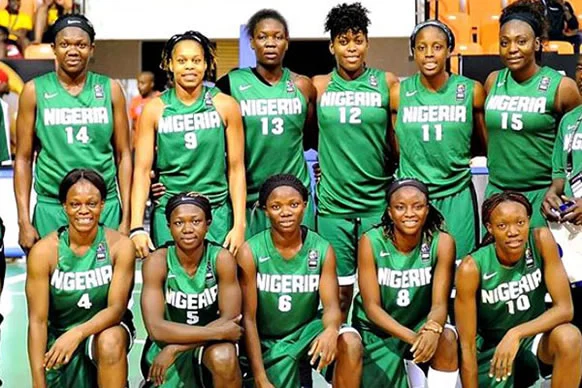
Nigeria’s women’s national basketball team, D’Tigress, delivered a campaign of
mixed fortunes at the FIBA Women’s Basketball World Cup 2026 Qualifying
Tournament in Villeurbanne, France.
The African champions won two of four matches, offering encouraging moments
but also exposing weaknesses requiring attention before the global tournament
begins.
Although Nigeria had already qualified through continental success, the qualifiers
provided a critical platform to evaluate tactical readiness against diverse
international opponents.
For the coaching staff, the competition served as a diagnostic exercise to identify
strengths, weaknesses and areas demanding urgent improvement.
Across four games, D’Tigress displayed resilience, physicality and competitive
spirit that have defined Nigeria’s dominance in African women’s basketball.
However, the matches equally highlighted tactical gaps, particularly against teams
relying on pace, perimeter shooting and disciplined ball circulation.
Nigeria began the tournament with an emphatic 70–37 victory over the Colombia
women’s national basketball team.
From the opening minutes, D’Tigress imposed themselves physically, contesting
rebounds aggressively and disrupting Colombia’s attacking rhythm.
Nigeria’s defensive pressure forced numerous turnovers, allowing the team to
convert quickly through fast breaks and transition scoring.
The African champions steadily built their lead through efficient ball movement
and consistent defensive stops.
The decisive moment arrived during the third quarter when Nigeria produced a
dominant scoring run.
That surge effectively ended Colombia’s hopes of recovery and extended Nigeria’s
lead beyond reach.
Colombia struggled to cope with Nigeria’s physical presence and relentless
defensive pressure throughout the match.
The South American side eventually finished with only 37 points, highlighting
Nigeria’s defensive dominance in the opening fixture.
The strong start, however, was followed by a setback against the South Korea
women’s national basketball team.
Nigeria suffered a 77–60 defeat in a match where tactical contrasts became
evident.
South Korea relied on pace, sharp passing and perimeter shooting to destabilise
Nigeria’s defensive structure.
Quick ball movement created spacing problems for Nigeria’s defence and opened
clear three-point opportunities.
The Asian side gradually widened the gap by exploiting defensive lapses and
converting outside shots efficiently.
Although D’Tigress attempted to recover in the second half, South Korea
maintained composure and control.
Nigeria struggled to match their opponent’s offensive efficiency and eventually lost
by 17 points.
The defeat highlighted a recurring challenge for Nigeria against teams that
emphasise speed and long-range shooting.
D’Tigress responded impressively in their third match, defeating the Philippines
women’s national basketball team 101–84.
The match began competitively, with both teams exchanging baskets during a
closely contested first half.
However, Nigeria seized control after halftime with an explosive offensive
display.
Fast transitions and aggressive defensive pressure allowed D’Tigress to capitalise
on turnovers.
Repeated fast breaks produced easy scoring opportunities and energised Nigeria’s
attacking rhythm.
Nigeria eventually surpassed the 100-point mark, demonstrating their offensive
capability when operating at high tempo.
The victory also reaffirmed the squad’s resilience after their earlier defeat.
It illustrated how quickly the team can recover when playing to their strengths.
Nigeria concluded their campaign with a difficult encounter against the France
women’s national basketball team.
France controlled the tempo from the opening minutes, dictating play with
disciplined organisation.
Their defence restricted Nigeria’s scoring lanes and forced the African champions
into difficult shooting positions.
Efficient ball circulation allowed the hosts to exploit gaps in Nigeria’s defensive
rotations.
France gradually extended their lead while maintaining defensive discipline and
tactical control.
Nigeria struggled to break through France’s structured defence during half-court
possessions.
The hosts eventually secured a convincing 84–62 victory before their home
supporters.
The result emphasised the tactical discipline and depth typical of leading European
basketball teams.
Nigeria finished the tournament with two wins and two defeats, reflecting both
potential and areas needing refinement.
One of D’Tigress’ strongest assets remains their physical presence on the court.
Against Colombia and the Philippines, Nigeria dominated through rebounding
strength, defensive pressure and transition scoring.
The team’s ability to force turnovers often transforms defence into quick attacking
opportunities.
When Nigeria pushes the pace effectively, they become one of the most dangerous
transition teams internationally.
However, the matches against South Korea and France revealed structural
weaknesses.
Nigeria struggled to contain teams that rely heavily on perimeter shooting.
Defensive spacing occasionally broke down, allowing opponents to find open
shooting opportunities from distance.
Rotational awareness and communication within the defence will therefore require
improvement.
Offensive consistency also emerged as a concern in structured situations.
While Nigeria thrives in open play, creating scoring chances in half-court systems
remains challenging.
Against organised defences, the team sometimes relies excessively on individual
efforts.
Improving ball circulation and off-ball movement will be essential before the
World Cup.
Perimeter defence will equally require urgent attention from the technical crew.
At the highest level, many teams rely heavily on three-point shooting to stretch
opposing defences.
Nigeria must therefore tighten rotations and close-outs to prevent opponents
exploiting space.
Developing a more structured half-court offence will also strengthen the team’s
tactical balance.
When transition opportunities disappear, patient ball movement becomes crucial.
Generating high-percentage scoring opportunities will depend on improved
tactical discipline.
Squad depth could also prove decisive against elite opponents.
Deeper rotations would help maintain defensive intensity throughout demanding
matches.
It would also reduce fatigue during fast-paced encounters against technically
organised teams.
Basketball grassroots coach Philip Braide expressed confidence in the team’s
overall potential.
According to him, the tournament reinforced Nigeria’s position as Africa’s
dominant women’s basketball power.
He said: “The team showed resilience and responded strongly to setbacks during
the competition.
“They also demonstrated the attacking potential that has made them a dominant
force on the continent.”
Braide added that tactical improvements could elevate the team’s competitiveness
globally.
“If D’Tigress refine defensive organisation and improve offensive efficiency
against structured opponents, they could emerge as a dangerous challenger,” he
said.
