By Abujah Racheal
The Coalition for Epidemic Preparedness Innovations (CEPI), has accelerated the
development of three investigational vaccines targeting the deadly Bundibugyo
ebola virus amid a rapidly spreading outbreak in Central Africa.
This is contained in a statement by CEPI on Monday in Oslo.
It said the vaccine being developed by IAVI, Moderna, and the University of
Oxford in partnership with the Serum Institute of India, would be advanced toward
clinical trials as quickly as possible.
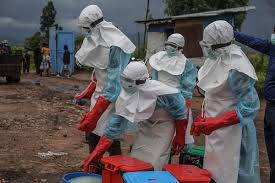
The move comes as the outbreak, affecting the Democratic Republic of the Congo
and neighbouring Uganda, record more than 900 suspected cases and over 220
suspected deaths, making it the third largest filovirus outbreak in history.
CEPI’s Chief Executive Officer, Dr Richard Hatchett, said the absence of licenced
vaccines for the Bundibugyo strain made urgent action critical.
“With Bundibugyo virus spreading rapidly and no licenced vaccines, every day
counts in the race against this deadly disease,” he said.
Hatchett added that the organisation’s funding would help fast-track safe and
effective vaccine options.
The World Health Organisation (WHO) and the Africa Centres for Disease Control
and Prevention have already classified the outbreak as a Public Health Emergency
of International Concern and a Public Health Emergency of Continental Security,
respectively.
WHO Director-General, Dr Tedros Adhanom Ghebreyesus, described CEPI’s
intervention as a crucial step in strengthening the global response.
“A Bundibugyo vaccine can help control this epidemic and strengthen
preparedness for future outbreaks,” he said.
Similarly, Africa CDC Director-General, Dr Jean Kaseya, noted that the
investment was vital not only for health security, but also for advancing Africa’s
vaccine research and manufacturing capacity.
CEPI said that each of the three vaccines was based on different, validated
technology platforms, including mRNA and viral vector systems, previously used
against related viruses such as Zaire Ebola, Sudan virus and Marburg virus.
It said its funding would support pre-clinical studies and early-stage trials, with
plans to move to large-scale trials and potential emergency use authorisation if
initial results prove successful.
The organisation also emphasised equitable access, noting that any successful
vaccine would be made rapidly available and affordable to affected countries.
Public health experts say the outbreak highlighted the urgent need for stronger
epidemic preparedness systems, particularly in Africa, where emerging infectious
diseases continue to pose significant threats.
The development also comes amid growing global concern over recurring
outbreaks of high-risk pathogens, reinforcing calls for sustained investment in
vaccine research and rapid-response infrastructure.
Ebola virus disease (EVD) is a severe, often fatal viral illness which spreads
through direct contact with infected body fluids or contaminated materials.
In the ongoing outbreak in the Democratic Republic of the Congo, there have been
at least 246 suspected deaths and 17 confirmed deaths.
Two countries are currently affected: the DRC and neighbouring Uganda.
Regional breakdown shows that in the DRC, there are at least 1,077 suspected
cases, including 246 suspected deaths and over 120 confirmed cases with 17
confirmed deaths, mainly reported in Ituri, North Kivu, and South Kivu provinces.
In Uganda, there are seven confirmed cases and one death, with infections linked
to travel from the DRC